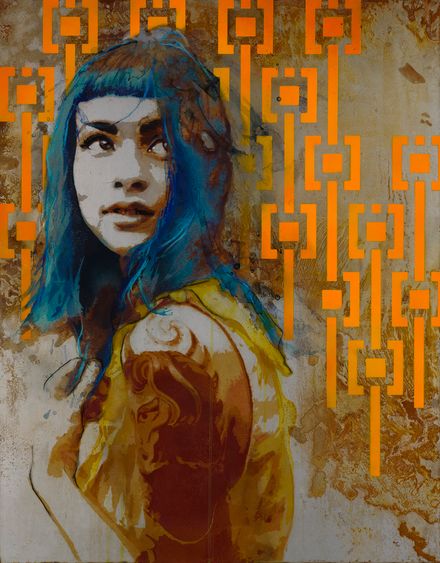

As if We Were Still Lovers II
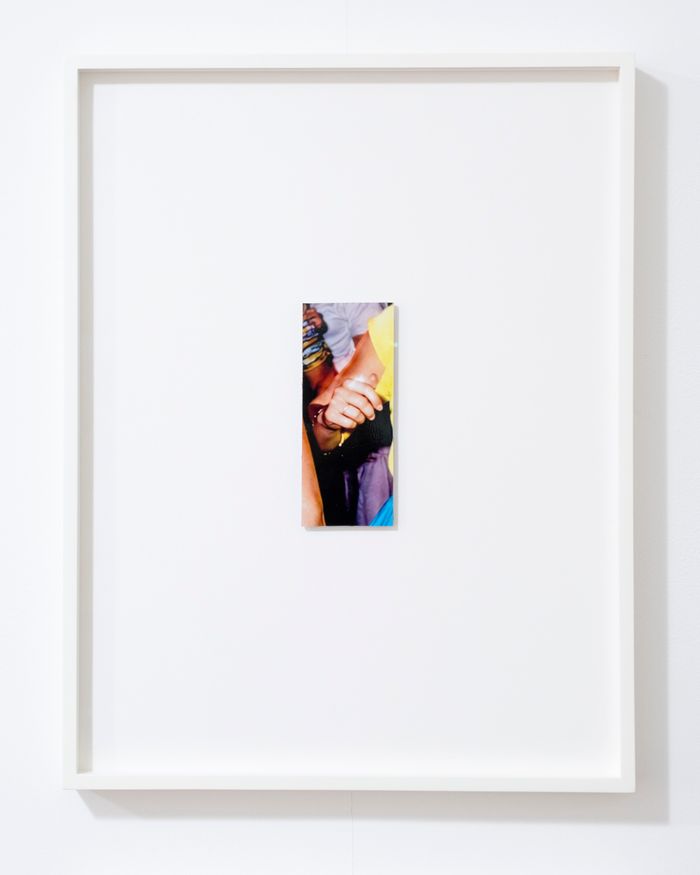
The series takes its title from the emotional terrain of nostalgia, echoing Louise by The Human League. It also recalls the band's own origin story: Joanne Catherall and Susan Ann Sulley were discovered dancing in a Sheffield nightclub before becoming members of one of Britain's defining synth-pop groups. For Holman, this movement from participant on the dancefloor to performer, and ultimately to cultural producer, represents a broader democratisation of creativity made possible through affordable synthesisers, recording technologies and new forms of image production.
Rather than beginning with photographs, Holman starts with writing. He records detailed recollections of remembered images of girls dancing in discos and appearing on television during the early 1980s. These texts become prompts for AI image generation before being re-photographed directly from a television screen. Each work therefore passes through successive technological translations, occupying a space between recollection, simulation and material object.
This methodology resonates with Mark Fisher's concept of hauntology, in which contemporary culture is inhabited by the ghosts of unrealised futures and mediated memories. The works do not reconstruct the past faithfully, but occupy the unstable territory where personal memory, collective cultural imagery and contemporary image technologies intersect.
Each unique C-type photograph is mounted onto aluminium and presented within a hand-crafted tulipwood museum-conservation frame fitted with anti-reflective glazing. Holman considers these works to be objects rather than pictures. Their physical construction combines advanced image-making technologies with traditional craftsmanship, embodying the central proposition of the series: that new technologies continually reshape who has access to cultural production, allowing the participant to become the producer. The series currently comprises thirteen unique works.